Roof Cleaning Without Pressure Washing: Why Soft Washing Is Safer for Shingles
Columbia Exterior Cleaning
Local exterior-cleaning crew ·
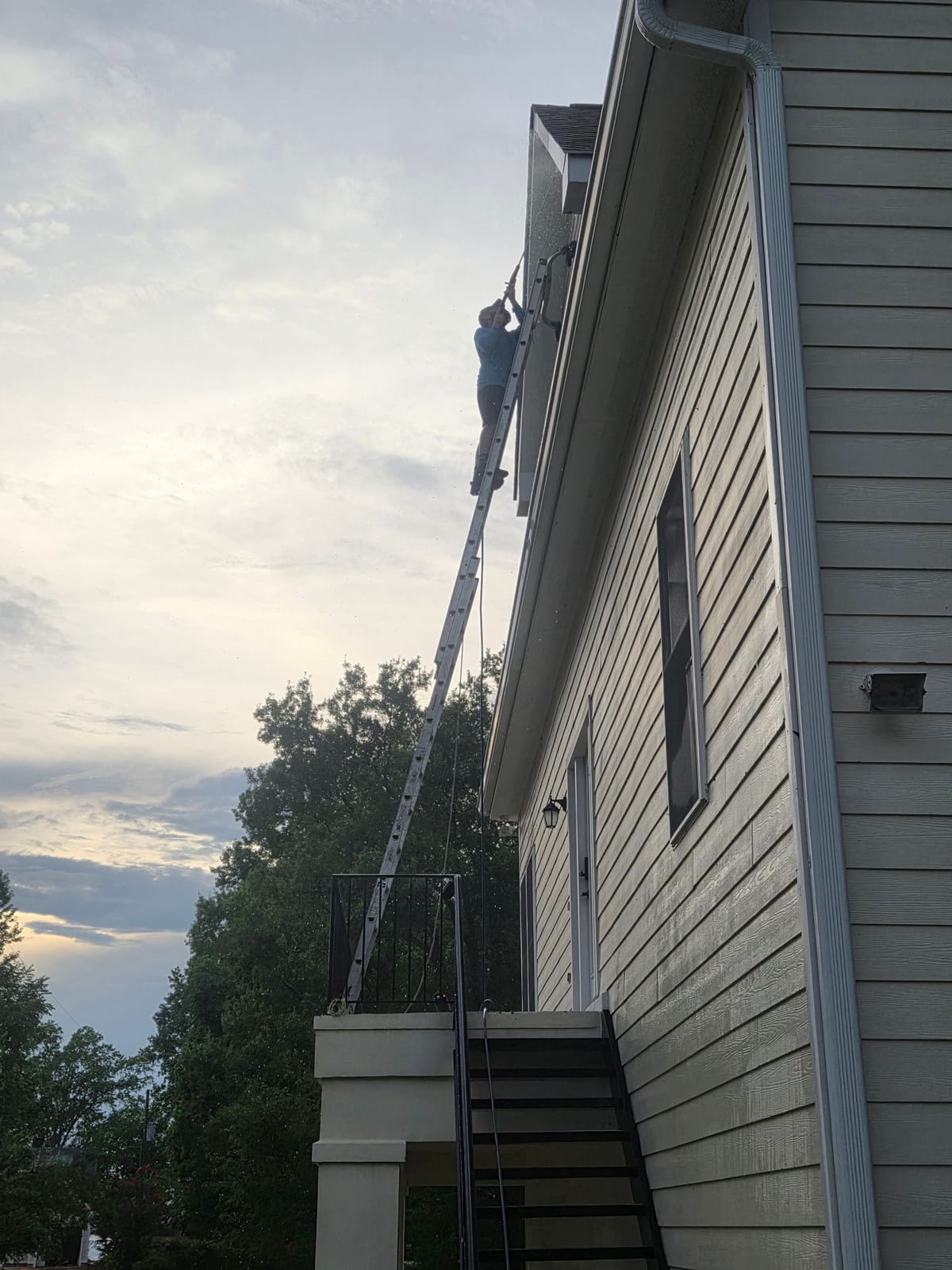
The safest way to clean a roof is soft washing — low-pressure chemistry, not high-pressure water. Roughly the pressure of a garden hose, combined with a cleaning solution that kills algae and mildew at the root, gets a roof clean without stripping the granules that protect asphalt shingles or forcing water under laps and flashing. Pressure washing a roof looks dramatic in before-and-after photos, but it trades a short-term cosmetic win for real, cumulative damage.
What's Actually Growing on Your Columbia Roof
If you're seeing dark streaks on an asphalt shingle roof, it's almost certainly Gloeocapsa magma — a blue-green algae extremely common across the humid Southeast, including the Midlands. It feeds on the limestone filler used in shingle granules and spreads by windborne spores, which is why it often shows up in patches on the north-facing slope first (the side that stays shaded and damp the longest) and why entire neighborhoods sometimes develop it around the same time. It's biological growth, not dirt — which matters, because dirt can be rinsed off, but algae has to be killed or it grows right back.
Why High-Pressure Roof Cleaning Causes Real Damage
- Granule loss. The mineral granules on asphalt shingles provide UV protection and weather resistance. High-pressure water physically strips them loose. Once granules are gone, they don't come back, and the exposed asphalt underneath degrades faster.
- Water forced under shingles. Pressure aimed upslope, or held too close, can drive water up and under shingle edges and flashing — exactly where you don't want moisture sitting against roof decking.
- Lifted or cracked shingle edges, particularly on older or already-brittle shingles.
- Warranty risk. Many shingle manufacturers' installation and warranty guidance advises against high-pressure cleaning specifically because of the granule-loss issue.
A roof pressure-washed once might look fine. A roof pressure-washed repeatedly over years is a roof that ages faster than its rated lifespan.
How Soft Washing Gets the Same Result Safely
Soft washing applies a diluted, biodegradable cleaning solution at roughly garden-hose pressure. The solution is what does the work — it kills the algae and mildew at the root rather than physically scouring it off the shingle surface. After treatment, the dead algae gradually lightens and washes away with normal rain over the following weeks, rather than disappearing instantly. That's a feature, not a delay: it means nothing abrasive ever touched the shingle surface.
This is the same principle behind every surface we clean — chemistry for anything porous or living, pressure only for hard flatwork like concrete. A roof is squarely in the "chemistry" category, every time.
Is Soft Washing Safe for All Roofing Materials?
Soft washing is the recommended approach across asphalt shingle, metal, and tile roofing — the pressure and solution are simply dialed to the material. What changes by material is dwell time and solution strength, not whether pressure gets used. Never let anyone tell you a specific roofing material "needs" high-pressure cleaning; none of them do.
What to Expect From a Professional Roof Soft Wash
- An inspection of the roof surface and an honest read on how heavy the algae or mildew coverage is
- Application of a cleaning solution to all affected areas, including ridgelines, valleys, and shaded slopes
- No walking on brittle or wet shingle areas unnecessarily, and no pressure equipment touching the roof surface
- A gradual, natural-looking clean-up over the following weeks as rain rinses the dead growth away
DIY Roof Cleaning: Proceed With Real Caution
Roof work carries genuine fall risk, and getting the cleaning solution ratio wrong can either fail to kill the algae or damage landscaping and gutters below. If you're not confident on a ladder or roof, this is one of the clearer cases where hiring a professional is worth it — both for safety and for making sure the algae is actually killed, not just knocked back for a few weeks.
Signs Your Roof Needs Attention
- Dark streaking starting near the ridge and working down a north-facing slope — classic Gloeocapsa magma pattern
- Granules collecting in gutters — some granule loss is normal over a roof's lifetime, but a sudden increase is worth a look
- Green patches in consistently shaded areas, particularly under overhanging oak or pine branches
- Visible staining from the street or driveway, which usually means the growth has been established for a while
Roof Cleaning and Gutters Go Together
A roof soft wash is a natural pairing with gutter cleaning, since the crew is already set up and working the roofline. Gutters clogged with granules, pine needles, and leaf debris from oak and pine canopy overhead also hold moisture against the fascia and roof edge, which can contribute to the same damp conditions algae needs to establish — addressing both in the same visit is efficient and often more cost-effective than two separate appointments.
How Roof Soft Washing Compares in Price to Pressure Washing
Soft washing a roof generally costs a bit more upfront than a straight pressure wash would, since the cleaning solution and dwell-time process take more care than simply blasting the surface. That modest premium is worth it: a pressure-washed roof looks clean immediately but the algae typically returns faster because the roots survive, meaning the job gets repeated more often. A soft-washed roof costs a little more per visit but needs far fewer visits over the life of the shingles — and it doesn't carry the granule-loss and warranty risk that comes with high-pressure cleaning. Judged over several years rather than a single visit, soft washing is almost always the better value, not just the safer choice.
Ready to have your roof soft-washed the right way? Call or text (803) 717-3217 for a free quote, or learn more about our roof cleaning (soft wash) service.
Frequently Asked Questions
Is it safe to pressure wash a roof?
No — high-pressure washing is not recommended on any roofing material. It strips the protective granules off asphalt shingles, can force water up under shingle laps and flashing, and can lift or crack shingle edges. Most shingle manufacturers do not recommend high-pressure cleaning. Soft washing, using low pressure and a cleaning solution, is the method roofing professionals recommend instead.
What's the black streaking on my roof in Columbia?
It's almost always Gloeocapsa magma, a blue-green algae that appears as dark streaks, most commonly on the north-facing slope of asphalt shingle roofs across the humid Southeast. It feeds on the limestone filler in shingle granules and spreads via windborne spores, which is why it often shows up on multiple homes in the same neighborhood around the same time.
How often should a Columbia, SC roof be soft-washed?
It depends heavily on shade and tree coverage. Roofs with significant oak or pine canopy overhead, or heavily shaded north-facing slopes, tend to show regrowth sooner than open, sun-exposed roofs. Most homeowners get well over a year of clean results from a professional soft wash, with sun-exposed roofs typically running longer between treatments than shaded ones.
Prefer to talk? Same-day answers — open 7 days, 7am–8pm.
(803) 717-3217Ready to Protect Your Home?
Free quotes, same-day response. Serving Columbia and the SC Midlands (Richland & Lexington counties).